Chronic Disease Reviews
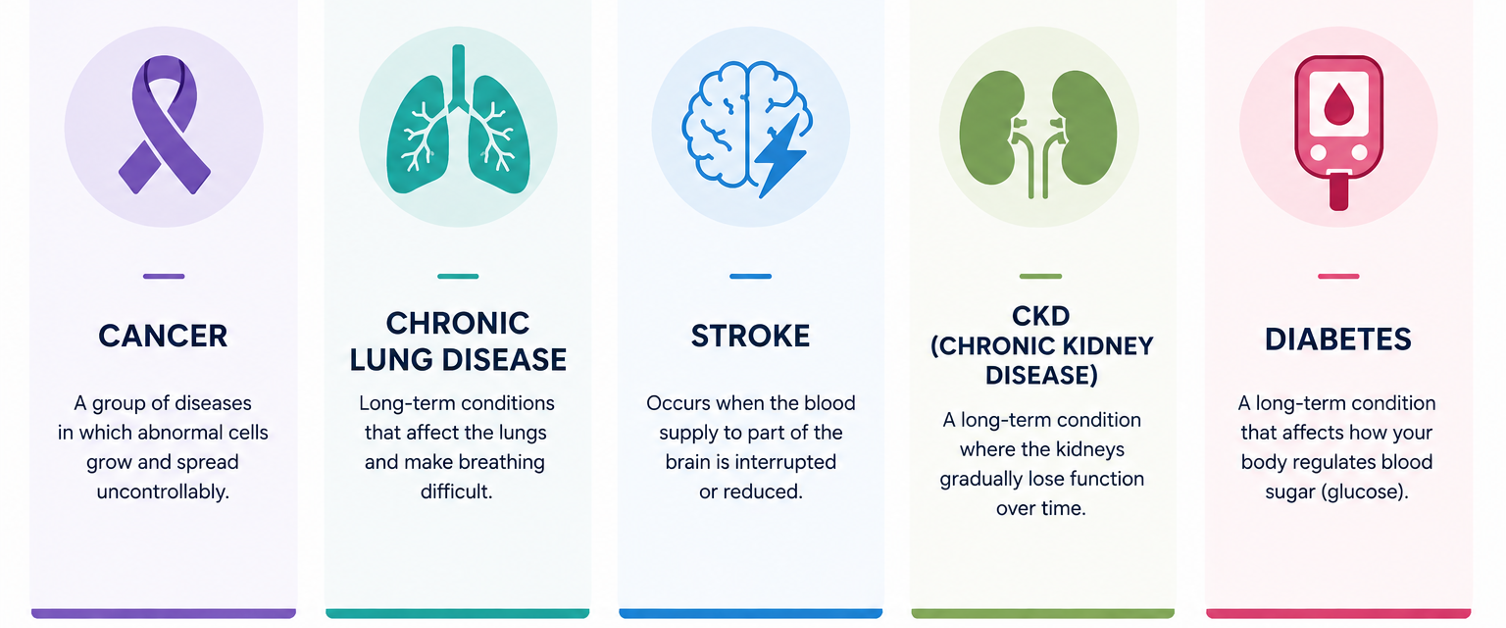
If you have a long-term health condition, it is important that your condition and medications are reviewed regularly. All patients with a chronic diseases are invited for an annual review to help ensure their condition is being managed effectively and to reduce the risk of complications.
We routinely invite patients with conditions such as:
- Diabetes
- Asthma
- COPD (Chronic Obstructive Pulmonary Disease)
- Hypertension (High Blood Pressure)
- Epilepsy
- Heart Disease
- Chronic Kidney Disease
- Hypothyroidism
- Atrial Fibrillation
- Dementia
- Other long-term health conditions
Patients are contacted once a year by SMS, email, or letter and invited to attend the appropriate monitoring and health review.
What does the review involve?
Your annual review is tailored to your individual condition and may include:
- Discussion about your general health and wellbeing
- Lifestyle advice, including diet, exercise, smoking cessation, and alcohol consumption
- Review of your current medications to ensure they remain safe and effective
- Blood pressure, weight, and other routine observations
- Blood tests and urine samples where required
- Monitoring for any complications related to your condition
- Support to optimise the management of your long-term health condition
Who will carry out my review?
Not all chronic disease reviews are carried out by a GP. Many reviews are more appropriately undertaken by a Practice Pharmacist or Practice Nurse, who are specially trained in the management of long-term conditions.
Our reception team will ensure that your appointment is booked with the most appropriate clinician for your review.
Why is it important to attend?
Regular reviews help us to:
- Monitor your condition effectively
- Ensure your medications are working well and remain appropriate
- Identify and treat any complications early
- Provide support and advice to help you stay as healthy as possible
If you receive an invitation for your annual review, please arrange your appointment as soon as possible. Attending your review is an important part of managing your long-term health condition and maintaining your overall health.
COPD Chronic obstructive pulmonary disease
Chronic obstructive pulmonary disease (COPD) is a long-term condition of the lungs where the flow of air to the lungs is obstructed. Symptoms include cough and breathlessness. The condition is most often caused by smoking and the most important treatment is to stop smoking. Inhalers are commonly used to ease symptoms. Other treatments such as steroids, antibiotics, oxygen, and mucus-thinning (mucolytic) medicines are sometimes prescribed in more severe cases, or during a flare-up (exacerbation) of symptoms.
For more information access COPD (Chronic Obstructive Pulmonary Disease): Overview
Asthma
Asthma is a common condition that affects the airways. The typical symptoms are wheeze, cough, chest tightness, and shortness of breath. Symptoms can range from mild to severe. Treatment with inhalers usually works well to ease and prevent symptoms.
For more information access Asthma: Causes and Triggers, Symptoms, Treatment
Epilepsy
Epilepsy is a long-term condition that affects the brain and causes repeated seizures. A seizure happens when there is a sudden burst of electrical activity in the brain, which can affect how a person feels, behaves, or moves for a short period of time.
Seizures can vary from person to person. Some people may lose awareness or become unconscious, while others may experience brief periods of confusion, unusual movements, or changes in their senses. The type and frequency of seizures can differ greatly between individuals.
Many people with epilepsy are able to manage their condition successfully with medication and regular reviews. It is important to take prescribed medication as directed and attend routine appointments to ensure treatment remains effective.
Patients with epilepsy will be invited for regular reviews to discuss their condition, review medications, and address any concerns. These reviews help to ensure that epilepsy is well controlled and that treatment continues to meet individual needs.
For more information, please visit:
Epilepsy: Causes, Triggers, and Treatment
NHS 111 Wales - Health A-Z : Epilepsy
Epilepsy Action - Trusted UK Charity - Support, Advice & Training
Hypertension: High blood pressure
High blood pressure, also known as hypertension, is a common condition where the pressure of blood flowing through the blood vessels is higher than normal. Over time, this can put extra strain on the heart and blood vessels and increase the risk of heart disease, stroke, kidney disease, and other health problems.
High blood pressure often does not cause any symptoms, which is why regular checks are important. A diagnosis is not usually made from a single reading, as blood pressure can change throughout the day depending on activity levels, stress, illness, and other factors. Several readings may be needed to confirm whether blood pressure is consistently high.
If you have high blood pressure, regular monitoring and medication reviews can help keep it under control. Healthy lifestyle choices such as maintaining a healthy weight, being physically active, eating a balanced diet, reducing salt intake, stopping smoking, and limiting alcohol can also help lower blood pressure and improve overall health.
Patients with hypertension will be invited for regular reviews to monitor their condition, review medications, and carry out any necessary blood or urine tests.
For more information, please visit:
High Blood Pressure (Hypertension): Symptoms and Causes
NHS 111 Wales - Health A-Z : Blood pressure (high)
Coronary Heart disease
Coronary Heart Disease (CHD) is a condition where the blood vessels supplying the heart become narrowed by a build-up of fatty deposits. This can reduce the flow of blood and oxygen to the heart.
Some people with CHD may experience chest pain (angina), breathlessness, or tiredness, particularly during physical activity. CHD can increase the risk of having a heart attack.
A healthy lifestyle, regular exercise, stopping smoking, and taking prescribed medication can help reduce the risk of further heart problems and improve overall heart health.
If you develop sudden chest pain, especially if it spreads to your arm, neck, jaw, or back, call 999 immediately, as this may be a heart attack.
Patients with CHD will be invited for regular reviews to monitor their condition, review medications, and check important measurements such as blood pressure and cholesterol levels.
Patients who have had a heart attack may also be referred to a Cardiac Rehabilitation Programme. Cardiac rehabilitation provides support, education, exercise advice, and guidance to help recovery and reduce the risk of future heart problems.
For more information access: Coronary heart disease - types, causes & symptoms - BHF
Stroke CVA
A stroke causes damage to the brain. A common cause of stroke is a blood clot that forms in a brain blood vessel (artery). Immediate treatment may include a clot-busting medicine to dissolve the blood clot. Other treatments include medication to reduce risk factors for further strokes. Rehabilitation is a major part of treatment.
Having a stroke is a medical emergency. Disability following a stroke depends on factors such as the part of the brain affected, how quickly treatment was given and the extent of the damage to the brain. Call for an ambulance immediately if you suspect someone is having a stroke.
For more information access: Stroke | Signs, Symptoms, Causes and Prevention
Diabetes Mellitus
Diabetes is a long-term condition that causes the level of sugar (glucose) in the blood to become too high.
There are two main types of diabetes. Type 1 diabetes usually develops in childhood or early adulthood and requires insulin treatment. Type 2 diabetes is more common and is often linked to lifestyle factors, although it can affect people of all ages.
If diabetes is not well controlled, it can increase the risk of serious health problems, including heart disease, stroke, kidney disease, nerve damage, and problems with eyesight. Regular monitoring and good control of blood sugar levels can significantly reduce the risk of these complications.
Managing diabetes involves a combination of healthy eating, regular physical activity, maintaining a healthy weight, and taking medications or insulin if prescribed. Understanding your condition and being involved in your own care is an important part of staying healthy.
Patients with diabetes will be invited for regular reviews. These may include blood tests, blood pressure checks, foot checks, medication reviews, and discussions about lifestyle and diabetes management.
For more information, please visit:
Diabetes UK - Know diabetes. Fight diabetes. | Diabetes UK
Diabetes: Types, Advice, and Information
NHS 111 Wales - Health A-Z : Diabetes
Chronic Kidney Disease CKD
Chronic Kidney Disease (CKD) is a long-term condition where the kidneys do not work as well as they should. The kidneys help remove waste products and excess fluid from the body, as well as helping to control blood pressure and keep the body healthy.
CKD usually develops slowly over time and often causes no symptoms in the early stages. It is commonly detected through routine blood and urine tests. People with CKD may also have an increased risk of heart disease and stroke.
Although CKD cannot always be cured, regular monitoring and treatment can help slow its progression and reduce the risk of complications. Managing blood pressure, controlling diabetes, taking medications as prescribed, and maintaining a healthy lifestyle are all important parts of treatment.
Patients with CKD will be invited for regular reviews, which may include blood tests, urine tests, blood pressure checks, and medication reviews to help monitor kidney health and ensure the best possible care.
For more information, please visit:
Chronic Kidney Disease (CKD): Causes, Symptoms, and Treatment
Chronic kidney disease (CKD) | Kidney Care UK